




Google Reviews: The Complete Guide for Businesses
August 10, 2026
What Is Local SEO? A Beginner’s Guide
August 17, 2026
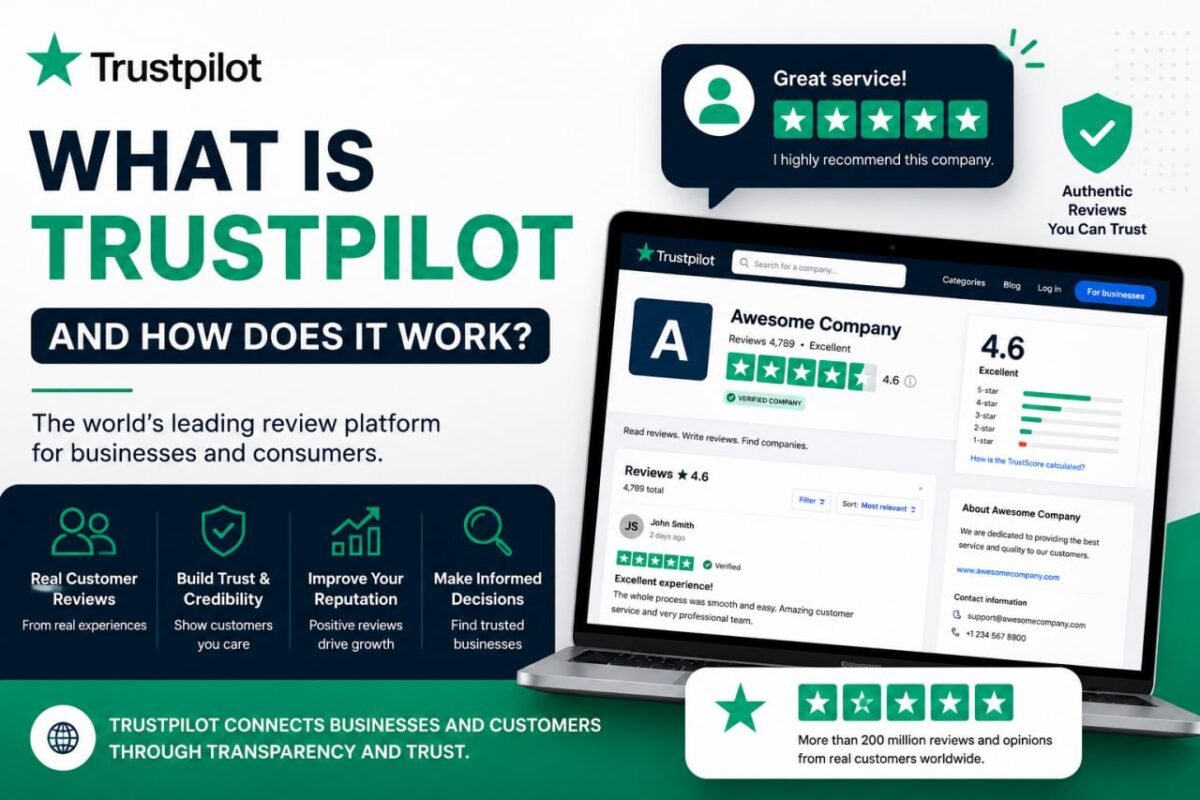
What Is Trustpilot and How Does It Work?
When it comes to building trust online, few platforms carry as much weight as Trustpilot. If you've ever researched a company before making a purchase, there's a good chance you've come across a Trustpilot score, a "TrustScore," or a badge of customer reviews embedded on a business's website. For businesses looking to strengthen their online reputation, understanding what Trustpilot is and how it works is a crucial part of any modern reputation management strategy.
In this guide, we'll break down exactly what Trustpilot is, how the platform works, why it matters, and how your business can use it to get positive feedback that drives more leads and sales.
What Is Trustpilot?
Trustpilot is a global, open review platform where customers can rate and review businesses across virtually every industry — from e-commerce and SaaS companies to local service providers. Founded in Denmark in 2007, Trustpilot has grown into one of the most recognized third-party review platforms in the world, hosting millions of reviews across hundreds of thousands of businesses.
Unlike closed review ecosystems tied to a single platform (like Amazon reviews, which only apply to Amazon purchases), Trustpilot is independent and open to any business or consumer. This independence is part of what makes it such a trusted source of feedback — reviews aren't filtered through a single retailer or service provider, which gives customers confidence that the feedback is unbiased.
How Does Trustpilot Work?
For Consumers
Any consumer can create a free Trustpilot account and leave a review for a business, whether or not they were invited to do so. Reviews typically include a star rating (one to five stars), written feedback, and sometimes photos. Consumers can also read existing reviews, filter by rating, and check a business's overall TrustScore before deciding whether to engage with that company.
For Businesses
Businesses can create a free Trustpilot profile to claim their listing, respond to reviews, and monitor customer feedback. However, Trustpilot also offers paid subscription plans that unlock additional features, such as:
- Automated review invitations sent to customers after a purchase
- Customizable review widgets to display on your website
- Analytics and reporting on review trends
- Marketing tools to showcase reviews in email campaigns and social media
Even without a paid plan, businesses can and should claim their free profile, since reviews can be posted about your business whether you're actively managing the listing or not.
What Is a TrustScore?
Trustpilot calculates a TrustScore, displayed out of five, based on several factors, including the volume of reviews, how recent they are, and their overall star ratings. Unlike a simple average, Trustpilot's algorithm weighs recent reviews more heavily, meaning your score reflects your current customer experience rather than reviews from years ago. This makes ongoing review generation essential — a business that consistently works to get positive feedback will see its score better reflect its current reputation, while a business that ignores reviews may see its score stagnate or decline.
Why Trustpilot Matters for Your Online Reputation
It Adds a Layer of Third-Party Credibility
Because Trustpilot is an independent platform, reviews carry a sense of authenticity that self-hosted testimonials on a company website simply can't replicate. Potential customers trust it because businesses have less direct control over what gets posted, making it a powerful trust signal.
It Improves Search Visibility
Trustpilot pages are highly optimized and tend to rank well in search engines. When someone searches your business name alongside terms like "reviews" or "is [company] legit," your Trustpilot profile often appears on the first page of results — meaning your TrustScore may be one of the first things a potential customer sees. This makes Trustpilot management a meaningful piece of your overall online reputation, not just a side platform.
It Can Be Displayed Across Marketing Channels
Businesses can embed Trustpilot review widgets on their website, include TrustScores in email campaigns, and feature reviews in paid ads. This turns real customer feedback into an active marketing and lead-generation asset, reinforcing trust at every stage of the buyer's journey.
It Builds Trust for High-Consideration Purchases
Trustpilot is especially influential for businesses where trust plays a large role in the buying decision — SaaS subscriptions, financial services, e-commerce brands, and service-based businesses. A strong TrustScore backed by detailed, positive feedback can be the deciding factor for a hesitant buyer.
How to Build a Strong Trustpilot Presence
1. Claim and Optimize Your Free Profile
Start by claiming your business listing, adding your logo, website link, and business description. An optimized, professional-looking profile signals legitimacy to anyone who lands on your page.
2. Set Up Automated Review Invitations
The easiest way to consistently get positive feedback is to make asking for reviews part of your standard process. Automated invitations sent via email shortly after a purchase or completed service tend to generate the highest response rates.
3. Make It Easy for Customers to Leave Feedback
Just like with Google Reviews, friction kills participation. Keep the review process short, mobile-friendly, and clearly linked from your emails, receipts, or order confirmation pages.
4. Respond to Every Review
Responding to both positive and negative reviews shows that your business is actively engaged in customer experience and reputation management. Thank customers for positive feedback, and respond to negative reviews with empathy, professionalism, and a genuine offer to resolve the issue.
5. Never Use Fake or Incentivized Reviews
Trustpilot has strict guidelines against fake reviews, incentivized reviews, and review manipulation. Violating these policies can result in flagged reviews, profile penalties, or account suspension. The most sustainable strategy is always building genuine, consistent review generation through excellent customer experience.
6. Monitor and Analyze Trends
Regularly review your feedback for recurring themes — both praise and complaints. This customer feedback is a free source of insight that can guide product improvements, service adjustments, and customer experience upgrades.
Trustpilot vs. Other Review Platforms
While Google Reviews are often the first thing potential customers see due to their prominence in local search and Google Maps, Trustpilot plays a complementary role — particularly for online businesses, e-commerce brands, and companies operating beyond a single physical location. A well-rounded online reputation management strategy typically includes a presence across multiple platforms, including Google, Trustpilot, Facebook, and industry-specific review sites, ensuring consistency no matter where a potential customer looks.
Final Thoughts
Trustpilot has become one of the most influential third-party review platforms for building consumer trust, improving search visibility, and turning customer feedback into a genuine marketing asset. By claiming your profile, consistently working to get positive feedback, and responding thoughtfully to every review, your business can use Trustpilot as a powerful piece of a broader online reputation management strategy.
If managing review platforms like Trustpilot alongside Google, Facebook, and social media feels like more than you have time for, that's exactly what we specialize in. We help businesses automate review generation, respond to feedback across every major platform, and build a consistent, trustworthy online reputation that turns into real, measurable leads.
